






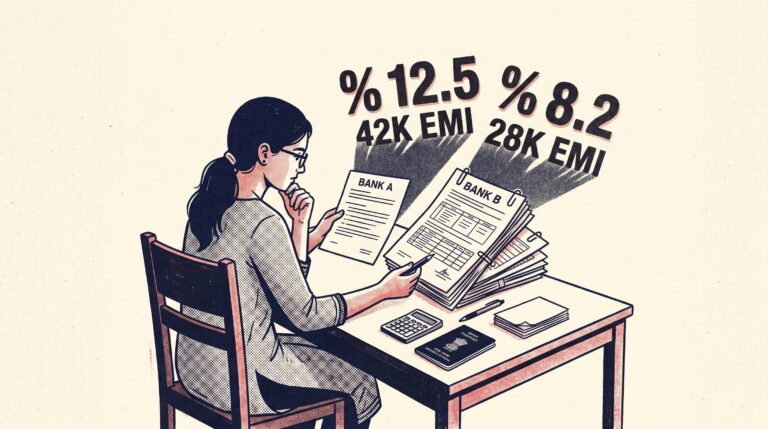
The refinancing rate you are offered is not a fixed number – it is determined by your credit profile, visa status, the lender you choose, and market conditions. For Indian graduates, the starting point that matters most is knowing what rates are actually available right now, which lenders serve your specific situation, and what the gap is between your current rate and what you could access.
Here is the current picture for June 2026.
Current Student Loan Refinance Rates – June 2026
| Lender | Fixed APR (Starting) | Variable APR (Starting) | For Indian Graduates? | Direct Indian Loan Payoff? |
| MPower Financing | 9.99% fixed | N/A (fixed only) | Yes – OPT, H-1B, H-4 EAD accepted | Yes – SWIFT wire to Indian banks |
| SoFi | 2.98% – 3.99%+ (US citizens/PRs); higher for visa holders | 4.39%+ | Limited – check sofi.com; testing visa-holder refi | No – self-remit model |
| Citizens Bank | 6.40%+ (with US cosigner) | Available | Yes – with US citizen/PR cosigner | No |
| Credible (marketplace) | 3.99%+ (lowest advertised June 2026) | 3.59%+ | Primarily US citizens/PRs | No |
| Earnest | 4.29%+ | Variable available | US citizens/PRs primarily | No |
| Laurel Road | 5.24%+ | Available | US citizens/PRs primarily | No |
| Prodigy Finance (refi) | ~12%+ APR | N/A | Yes – but availability intermittent as of June 2026 | Check current status |
| GradRight platform | Multiple lenders bid for your profile | Varies by lender | All categories – matches by visa status | Depends on matched lender |
Rate disclaimer: All rates above are lowest advertised fixed APRs as of June 2026. Actual rate offered depends on your credit profile, income, visa status, loan amount, and tenure. Rates change with market conditions. Verify current rates at each lender’s official website before applying. Sources: The College Investor (June 25, 2026), SoFi.com (May 21, 2026), GradRight Best US Lenders article (June 2026).
The Most Important Rate Fact for Indian Graduates
If your education loan still sits with an Indian lender (SBI, Avanse, HDFC Credila, ICICI, or any other), MPower Financing is currently the only fully operational cross-border refinancing path. They wire payoff funds directly to Indian banks via SWIFT, starting at 9.99% fixed APR with no cosigner required.
This matters because most US refinancing lenders with lower advertised rates (SoFi at 2.98%, Earnest at 4.29%) do not pay off India-serviced loans directly. Their lower rates are accessible only after you have already moved to a US-based loan. The practical sequence for most Indian graduates is: MPower first (closes Indian loan, begins US credit history), then refinance again with a mainstream lender 3-6 months later at potentially lower rates.
| Your Situation | Best Rate Path |
| Indian loan still with SBI, Avanse, HDFC Credila etc. | MPower at 9.99% fixed – only mainstream lender that wires directly to Indian banks. No cosigner required. |
| Already have a USD loan (from Prodigy, MPower, or US cosigner) | Shop broader US market: SoFi, Citizens Bank, Laurel Road, Earnest, ELFI. Competitive rates 4-7% for strong profiles. |
| Have a US citizen/PR cosigner available | Citizens Bank with cosigner. Potentially access mainstream US rates even for visa holders. |
| Permanent resident or US citizen | Full access to all US refinancing lenders. Shop for best rate across Credible, Earnest, SoFi, Laurel Road. |
Also Read: Are You Eligible to Refinance Your Student Loans?
What Actually Determines Your Refinancing Rate
No two borrowers get the same rate. Here are the factors that determine where your offer lands within any lender’s advertised range:
| Factor | Impact on Rate | What to Do |
| Credit score (FICO) | Single largest factor. 750+ gets best rates; 650-700 gets median; below 650 may not qualify. | Build score to 700+ before applying. Secured credit card + autopay + low utilization. |
| Income and employment stability | Higher income = stronger profile = lower rate. Gig/internship income typically not counted. | Apply after 3-6 months of stable full-time employment. Include offer letter. |
| Debt-to-income ratio | Lower DTI = lower rate. Target under 35% for best rate tier. | Pay down credit card balances before applying. |
| Loan amount | Most lenders give slightly better rates on larger balances (more revenue certainty). | Refinance the full outstanding balance, not a portion. |
| Tenure chosen | Shorter tenures generally come with lower rates. | Choose the shortest tenure where EMI is comfortable. |
| Autopay enrollment | 0.25% rate reduction at most lenders for autopay enrollment. Free improvement. | Always enroll autopay on day one. |
| Fixed vs variable rate | Variable starts lower but can rise. Fixed gives certainty. | Indian graduates earning in USD: fixed rate removes both interest rate risk and currency risk. |
| Lender competitiveness | Different lenders price the same profile differently. | Always get quotes from at least 3 lenders before deciding. |
The 2% Rule – When Is a Rate Difference Worth Acting On?
The 2% rule of refinancing says you should only refinance if your interest rate decreases by at least 2%. This is a useful guideline but does not account for all factors.
| Rate Drop | On Rs 20L Loan (10 years) | On Rs 40L Loan (10 years) | Is It Worth Refinancing? |
| 0.5% | ~Rs 56,000 total saving | ~Rs 1.12L total saving | Calculate break-even first. May not be worth transition costs. |
| 1% | ~Rs 1.1L total saving | ~Rs 2.2L total saving | Usually worth it if transition costs are under Rs 30,000. |
| 2% | ~Rs 2.2L total saving | ~Rs 4.4L total saving | Almost always worth it. |
| 4%+ (e.g., 13% INR to 9% USD) | ~Rs 4.4L+ saving (plus currency benefit) | ~Rs 8.8L+ saving (plus currency benefit) | Strongly worth it for most profiles. |
Note: the 2% rule does not account for currency risk elimination, cosigner release, or US credit history building – all of which add value beyond the rate differential. For Indian graduates moving from an INR loan to a USD loan, the total benefit is often larger than the rate number alone suggests.
Fixed or Variable Rate: Which Is Lower Right Now?
Variable rates are currently lower than fixed rates in June 2026. Credible’s marketplace shows variable starting at 3.59% vs fixed starting at 3.99%. But variable rates change with market conditions – if the US Federal Reserve raises rates, your variable rate rises too, increasing your EMI.
For Indian graduates in the USA, GradRight generally recommends fixed rates. Here is why: you have already removed one variable (currency fluctuation) by moving from an INR loan to USD. Adding interest rate variability on top creates a second unpredictable cost. A fixed rate at 9.99% (MPower) is more manageable to budget around than a variable rate that could be 7% today and 10% in two years.
| Rate Type | Pros | Cons | Best For Indian Graduates? |
| Fixed | Predictable EMI. No surprise increases. | Starts slightly higher than variable. | Yes – especially on the cross-border MPower refinance where you are already managing INR-USD complexity. |
| Variable | Starts lower. Benefits from rate cuts. | EMI can rise if rates increase. Less predictable budgeting. | Only if expecting to repay quickly (under 5 years) and rates expected to stay flat or fall. |
Get competing refinancing rate quotes from multiple lenders matched to your profile on GradRight. Free, one profile. Compare Refinance Rates on GradRight
Six Steps to Actually Finding the Lowest Rate Right Now
Step 1: Know your current rate and outstanding balance. You cannot evaluate a new offer without knowing exactly what you are replacing.
Step 2: Check your FICO score before applying. If below 680, build it for 3-6 months first. If above 720, you are in the range for competitive mainstream US rates.
Step 3: Pre-qualify at all lenders that accept your visa type. Soft inquiries do not affect your score. Get actual rate quotes, not just advertised minimums.
Step 4: Compare APR, not just interest rate. APR includes origination fees (if any) and gives a true annualised cost. A 5% rate with a 2% origination fee may cost more than a 5.5% rate with no fees over a short tenure.
Step 5: Apply to your shortlisted lenders within 14-45 days. Multiple refinancing inquiries in this window count as one hard inquiry in the FICO system.
Step 6: Enroll in autopay immediately after approval. Most lenders give a 0.25% rate reduction for autopay – a free improvement that requires no negotiation.
What GradRight Users Report
From the GradRight refinancing platform:
“GradRight made my education loan refinance process smooth and stress-free. Their platform helped me secure a 3% lower interest rate by connecting me with the right lender and guiding me through every step.”
– Mr. Chakravarthy, via GradRight refinancing platform
“With the right support, I successfully refinanced my loan, cutting my interest rate down to just 6.25%. Less than half of what I was paying earlier.”
Also Read: How Much Can You Save? Real-Life Success Stories of Refinancing
GradRight lets lenders bid for your profile. One submission, competing rate offers, lowest deal surfaces automatically. Find Your Lowest Rate on GradRight
Related Guides
Are You Eligible to Refinance Your Student Loans?
SoFi vs Citizens Bank: Which Student Loan Refinance Is Better?
Best US Lenders to Refinance Your Education Loan 2026
6 Expert Tips to Get the Best Student Loan Refinance Offer
How Refinancing Your Education Loan Can Save You Lakhs
How Much Can You Save? Real-Life Stories of Refinancing
Building Your US Credit History with Refinanced Education Loans












 Australia
  Canada
  France
  Germany
  India
India  Ireland
  UAE
UAE  United Kingdom
  United States